
What does one year since the Ukrainian government adopted the Rule of Law Roadmap signify? It marks a year during which our State’s strategic commitments have increasingly taken on a practical dimension – in decisions, procedures, institutional changes, and tangible results.
For public institutions, this document has served as a kind of framework for the rule of law: it has linked Ukraine’s European integration commitments with specific tasks, expected outcomes, and implementation deadlines within the framework of the negotiations on accession to the European Union.
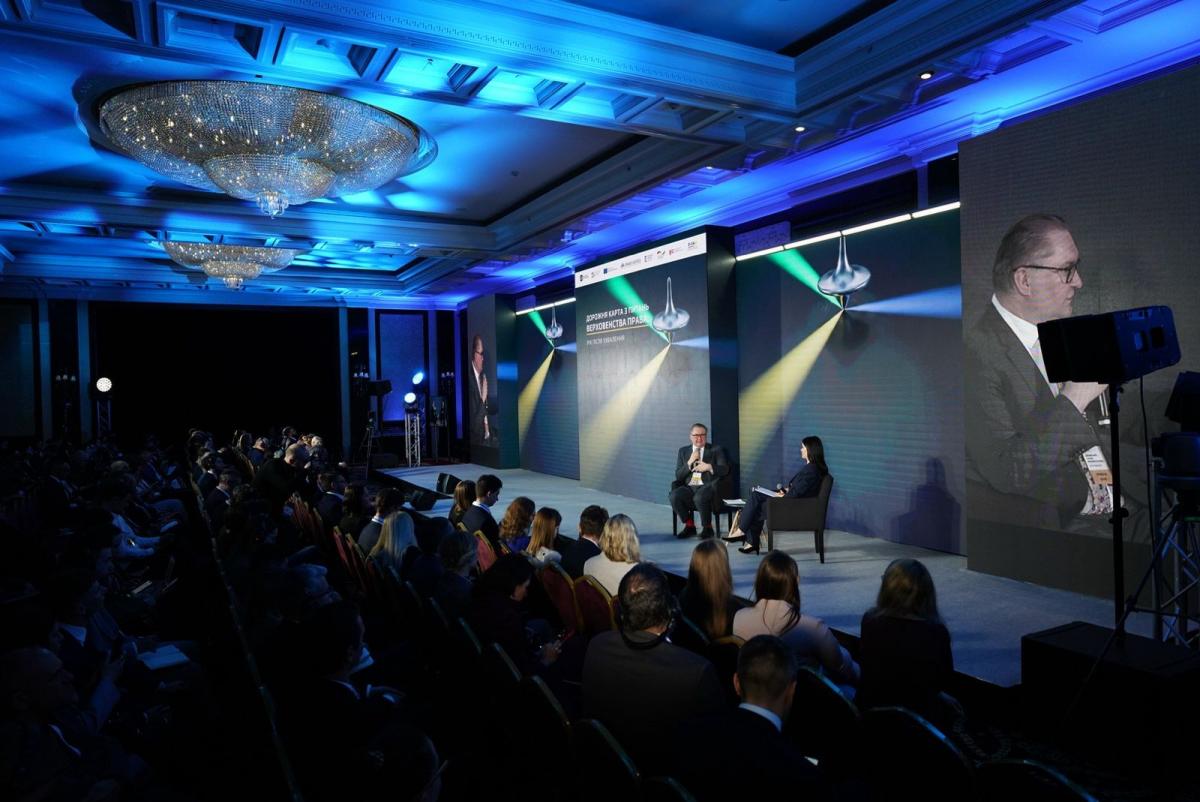
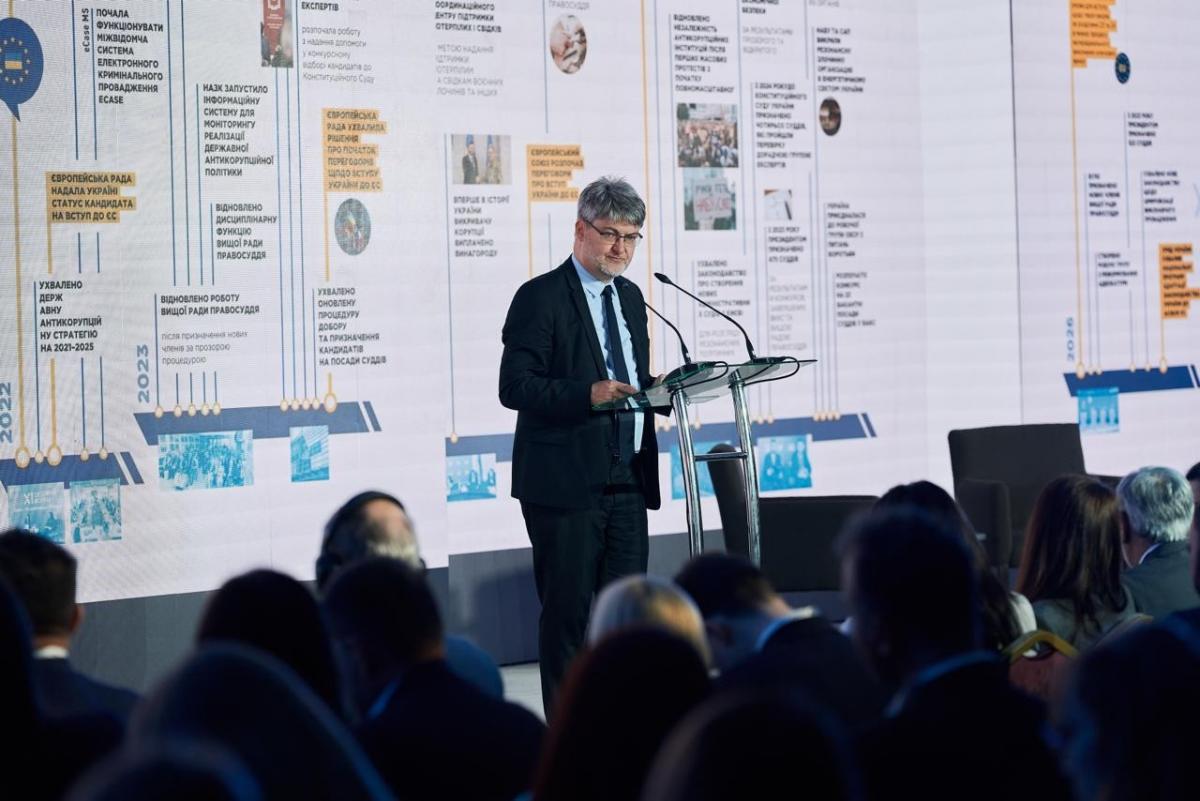
On the eve of the anniversary, on May 13, 2026, the Chairman of the High Qualification Commission of Judges of Ukraine, Andrii Pasichnyk, and the Deputy Chairman of the Commission, Oleh Koliush, participated in an event dedicated to Ukraine’s progress in fulfilling its commitments in the field of the rule of law. The discussion focused on the reforms set out in Cluster 1 “Fundamentals of the EU Accession Process”, which largely determines the overall logic of the negotiation process with the European Union.
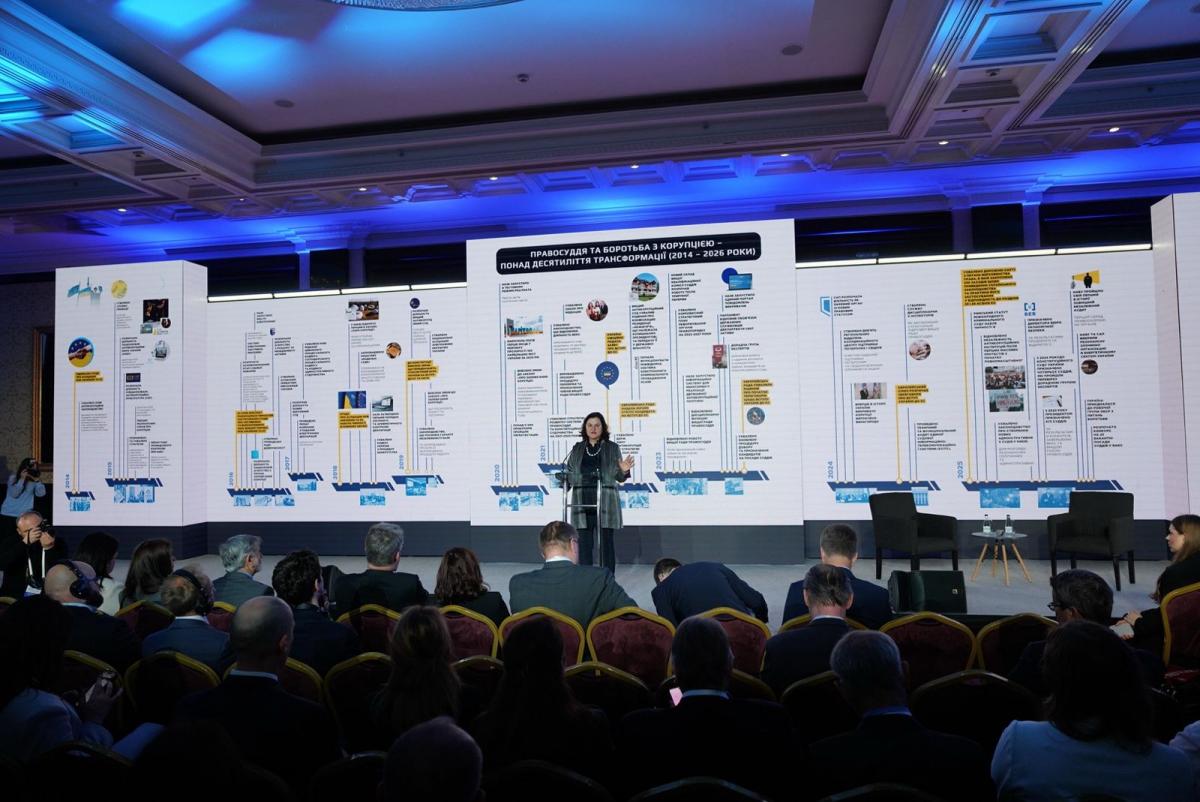
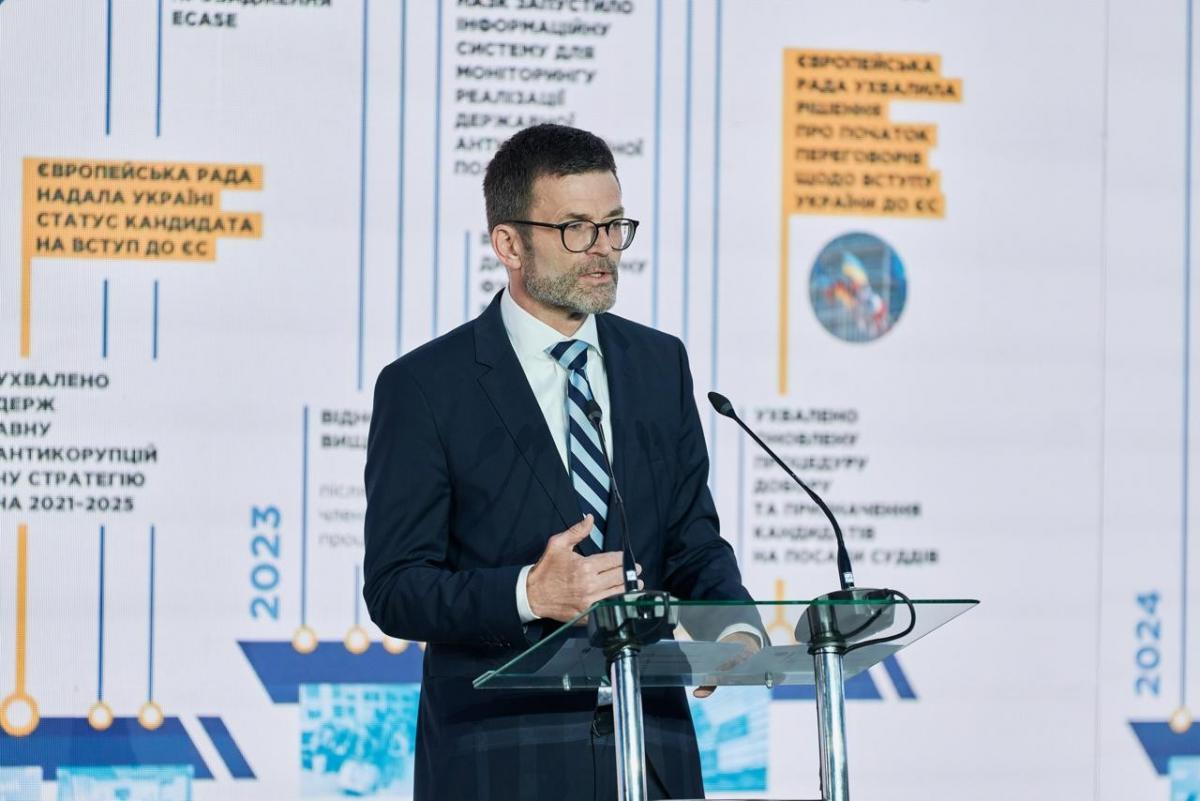
The event was opened with keynote addresses by the European Union Ambassador to Ukraine, Katarina Mathernova, the Ambassador Extraordinary and Plenipotentiary of the French Republic to Ukraine, Gael Veyssiere, and the Ambassador Extraordinary and Plenipotentiary of the Federal Republic of Germany to Ukraine, Heiko Thoms. In their remarks, the diplomats expressed a common view: Ukraine’s path towards the European Union is taking place under unique circumstances – amid a full-scale war, security challenges, and the State’s daily struggle for its future. At the same time, it is precisely under such conditions that reforms in the field of the rule of law acquire particular importance, as the European Union is not merely a common market or a political union, but above all a space founded on law, trust, institutional accountability, and respect for human dignity.
Can a state at war simultaneously transform its institutions? Ukraine’s experience demonstrates that it can. The Roadmap has become one of the documents transforming this movement into a consistent, transparent, and measurable process.
The significance of the Roadmap within the broader context of European integration was also discussed during an interview with the Deputy Prime Minister of Ukraine for European and Euro-Atlantic Integration, Taras Kachka. He emphasised that the rule of law is not a static formula or a set of formal procedures, but a living mechanism that must be upheld through the day-to-day work of institutions, concrete decisions and results. Furthermore, in his address, the Deputy Prime Minister paid particular attention to judicial reform, the selection of judges, competitive procedures and the formation of the judiciary. In this context, the work of the High Qualification Commission of Judges of Ukraine was positively noted; despite the current difficult conditions, it ensures the conduct of a large-scale selection of candidates for the positions of juges, competitions for the courts of appeal and high specialised courts, as well as other procedures necessary for the renewal and strengthening of the judicial system.
For the HQCJ of Ukraine, the Roadmap is not an abstract document of the European integration process, it is part of daily institutional work that directly concerns the quality of the judiciary, the transparency of procedures, the effectiveness of the assessment and selection of judges, and public trust in the judiciary. That is precisely why the Commission was involved in the work on the Roadmap as early as the drafting stage. Members of the HQCJ of Ukraine and staff of its Secretariat participated in drafting regulations falling within the Commission’s remit, formulating proposals, refining measures, setting deadlines for their implementation, and subsequently reporting on progress. In total, the Roadmap provides for 29 measures involving the HQCJ of Ukraine. In 13 measures, the Commission is designated as the lead implementer, and in 16 as a co-implementer. To date, the HQCJ of Ukraine has already implemented 6 measures in which it is the lead implementer, excluding individual sub-steps within other measures.
The programme of the event comprised three thematic panels. Participants discussed the role of reforms in the fields of justice, anti-corruption policy, and institutional capacity in the EU accession negotiation process; the importance of the rule of law for investment, economic development and Ukraine’s post-war recovery; as well as the societal dimension of reforms as a response to citizens’ demand for justice, integrity, and trust in the state.
The event brought together representatives of public authorities, judicial governance bodies, anti-corruption institutions, the diplomatic corps, international organisations and projects, civil society, and the expert community.
The conference was organised with the joint support of the Ministry of Justice of Ukraine, the Office of the Deputy Prime Minister for European and Euro-Atlantic Integration of Ukraine, the EU Project “Pravo-Justice”, implemented by Expertise France, and the programme “Strengthening Ukraine’s EU Accession in the Rule of Law” (3*E4U), implemented by Deutsche Gesellschaft für Internationale Zusammenarbeit (GIZ) GmbH with funding from the Federal Foreign Office of Germany and the European Union.
The implementation of the Roadmap is Ukraine’s responsibility, but it is not a path the country is undertaking alone. The support provided by European partners, projects, and international technical assistance programmes constitutes not only expertise and organisational assistance, but also an important signal of confidence in Ukrainian institutions, which, despite the conditions of war, continue to implement reforms necessary for Ukraine’s future membership of the European Union.